Frontier AI – The Trade-Offs for Creating Global Benefits
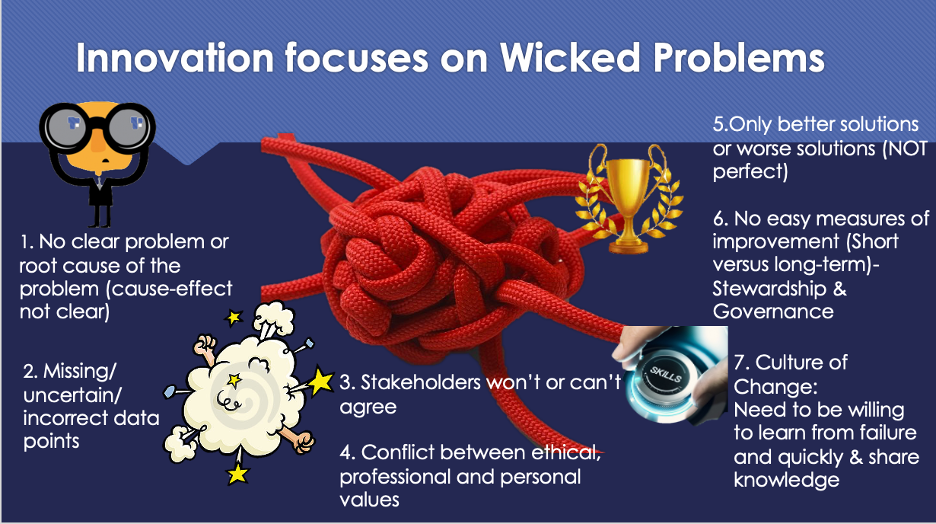
Governments work with wicked problems which have certain characteristics as seen the image above. Hence when you get a solution like “let us use frontier AI”, the outcomes may not be as simple to get for many reasons.
1. Tradeoff between Private Profits and Public Value
Governments need to be inclusive. Sometimes efficiency may be at the cost of creating jobs or the cost of creating a societal network based on physical interactions. Every time we make a decision choice, we need to consider the unintended consequences. So closing a physical outlet in a remote community and using a chatbot may mean less interaction with the service and long-term maybe a decrease in positive emotions with the entity. Governments unlike the private sector do not depend on profits but depend on trust (a harder commodity to accrue and sustain).
2. Tradeoff between short term benefits with intergenerational public value
The nature of AI systems is to optimize transactions through efficiency and productivity. The short-term benefits of this for the user can be convenience and saving time and for the deployer, data analytics and methods to “nudge” the user. Here we need to assess when “nudging” or gamification is good and what the long-term implications may mean. Does the short-term benefits lead to more costs in the long term as technical debt and cybersecurity costs go up? Does it mean we have a more negative impact on the planet? Are the monetary benefits equally benefiting all of society (remember governments are supposed to be inclusive)?
3. Tradeoff between engagement and literacy
Engagement with AI does not mean literacy. AI systems are complicated and without a clear understanding of HOW Ai systems are built, the impact on the user could be negative. Too much engagement means loss of critical thinking, loss of skills we take for granted (memory recall), meaningful time invested in relationships or even in self. We are seeing some of the impacts of social media addiction and chatbot addiction. How can we create whole-of-society literacy to ensure engagement is meaningful and not merely a profit-purpose motive? This needs to be carefully managed for sensitive sectors like government, education, health where governments own data and a duty of care need to be applied.
There are many other trade-offs. But when we deploy frontier AI systems in government arenas of public value, we need to ask a few questions
1. What is the impact on society (not just the individual)?
2. What is the impact on the family (not just the individual)?
3. How is the partnership with private sector creating inclusivity? Are there people being left behind due to accessibility (cost, skills etc.)?
4. Is AI a choice or is it forced (especially as the world is still figuring out data privacy issues) and if there is not choice (no opt in or opt out), who is vetting the AI systems?
Want to have a workshop or engage more on the topic? Contact me.


Comments